GLP-1 medications have changed the conversation around metabolic health and weight management in a fundamental way. Names like Ozempic, Wegovy, Mounjaro, and Zepbound are now part of mainstream vocabulary — but the science behind them, and what they actually do in your body, often gets lost in the headlines.
Here’s a clear, clinically-grounded explanation of what these medications are, how they work, and what patients in Illinois should know before considering them.
What Does GLP-1 Stand For?
GLP-1 stands for glucagon-like peptide-1 — a hormone your body naturally produces in the gut when you eat. It tells your pancreas to release insulin, tells your brain you’re full, slows the rate at which food leaves your stomach, and quiets the mental noise around hunger. GLP-1 receptor agonists are medications that mimic and amplify these effects.
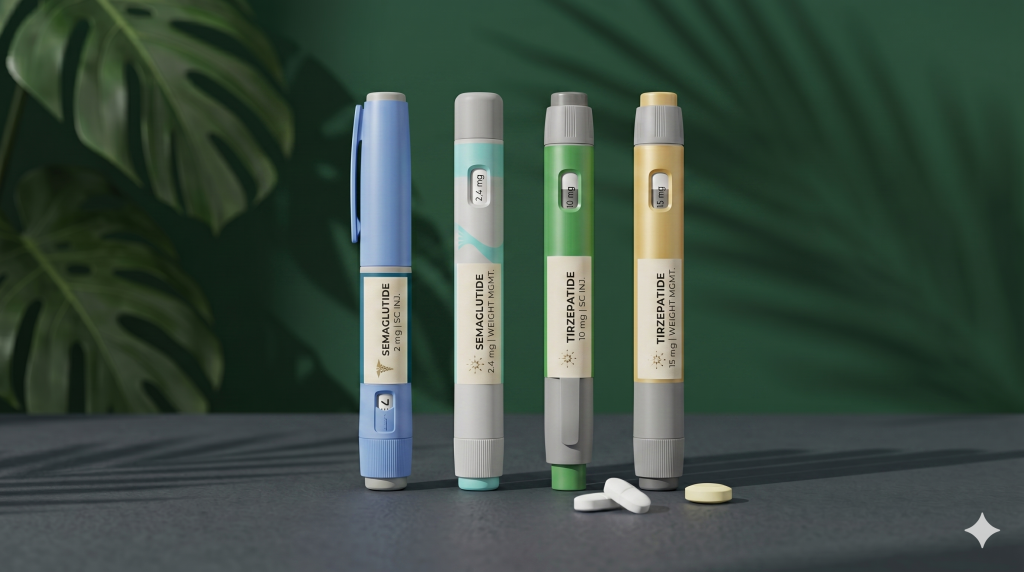
The Difference Between Each Medication
Semaglutide is the active compound in both Ozempic (approved for type 2 diabetes) and Wegovy (approved for chronic weight management). It’s a GLP-1 receptor agonist given as a once-weekly injection. Tirzepatide — the active compound in Mounjaro and Zepbound — works on both the GLP-1 and GIP receptors, which gives it a dual mechanism and slightly stronger metabolic effects in clinical trials. All four are prescription-only and require medical supervision.
What Patients Actually Experience
The most commonly reported benefit isn’t just weight loss — it’s the quieting of food noise. Patients describe a shift from constant preoccupation with food to feeling genuinely indifferent to overeating. Alongside this, blood sugar stabilizes, energy improves, and for many people, inflammatory markers decrease significantly. These changes occur because the medications are working on the metabolic root causes, not just suppressing appetite superficially.
What to Know About Side Effects
The most common side effects are gastrointestinal — nausea, mild bloating, or changes in bowel habits — especially during dose escalation. These typically improve as the body adjusts. Starting at a low dose and increasing gradually (which is standard practice) minimizes these effects significantly. Rare but serious risks exist, including pancreatitis and a potential concern for thyroid C-cell tumors in rodent studies (not confirmed in humans at prescribed doses), which is why these medications require ongoing clinical oversight.
Brand-Name GLP-1 and Clinical Oversight
At Nuu Metabolic, we prescribe brand-name GLP-1 medications only — Wegovy, Zepbound, Ozempic, Mounjaro, and Rybelsus — when clinically appropriate. These are FDA-approved finished products with established safety, dosing, and manufacturing standards. Because cost and coverage are common barriers, we provide prior authorization support to help eligible Illinois patients access these medications through licensed pharmacies.
GLP-1 medications are a powerful tool, but they work best as part of a comprehensive metabolic care plan — not as a standalone solution. The goal is always to use them in a way that builds lasting metabolic health, not dependency.
— Urooj Mujtaba, PA-C | Nuu Metabolic, Illinois
There’s now an oral option too: Foundayo (orforglipron), FDA-approved in April 2026, is the first GLP-1 pill that can be taken any time of day with no food or water restrictions. See how Foundayo compares to Wegovy and Zepbound if a needle-free option interests you.